Mounds, Bunds and Borders
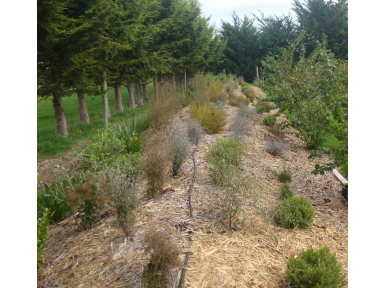
A mound planted with a diverse range of native species can provide significant biodiversity benefits while also contributing to broader environmental outcomes. Native vegetation creates habitat and shelter for insects, birds, lizards, and other wildlife, while flowers, fruits, seeds, and foliage provide important food resources. A variety of flowering plants can also support pollinators throughout different seasons.
The mound can contribute to healthier soils by supporting soil organisms, adding organic matter, and stabilising the ground through root systems. Its varied vegetation structure can increase habitat complexity and provide refuge and movement corridors for wildlife, particularly where the mound forms part of a wider network of planted areas.
Native planting also helps reduce soil erosion and stormwater runoff by slowing rainfall and strengthening the soil. Overall, a well-designed native planting mound can function as a small but valuable ecological feature, enhancing habitat, supporting local food webs, improving soil and water outcomes, and strengthening biodiversity within the surrounding landscape. Its value is maximised through the use of diverse, locally appropriate native species with different growth forms and flowering or fruiting periods.
Why Plant a Mound in Canterbury
- Drainage management: Heavy clay or seasonally waterlogged Canterbury plains soils benefit immensely from elevated root zones.
- Frost mitigation: Cold air pools in low spots; slightly raised mounds can keep tender plants out of the coldest frost pockets.
- Warming soil: Mounds warm up faster in spring sunshine compared to flat, compacted ground.
Step-by-Step Construction
- Clear the site: Remove perennial weeds and grass from the footprint of your planned mound.
- Loosen the base: Fork or cultivate the subsoil underneath the mound to prevent a hardpan layer and ensure proper water movement.
- Core building: Use a mix of existing site soil blended with compost, well-rotted organic matter, or a balanced planting mix.
- Shape correctly: Make the mound broad with a gentle slope (not steep) so irrigation or rain soaks in rather than runoff. Allow it to settle for a couple of weeks if built from scratch.
Planting and Aftercare
- Positioning: Place plants at the same depth they grew in their nursery containers—never bury the stem.
- Mulching: Apply a 100mm layer of bark mulch over the mound to conserve moisture through dry Canterbury summers, keeping the mulch slightly back from the main stems.
- Staking/Firming: Pack the soil firmly around the root ball to prevent the plant from rocking or loosening in high winds.
- Irrigation: Install a temporary drip line or hand-water regularly during the first dry establishment period, as elevated mounds dry out faster than flat ground.

Hours
Open 7 days a week: 10am-4pm